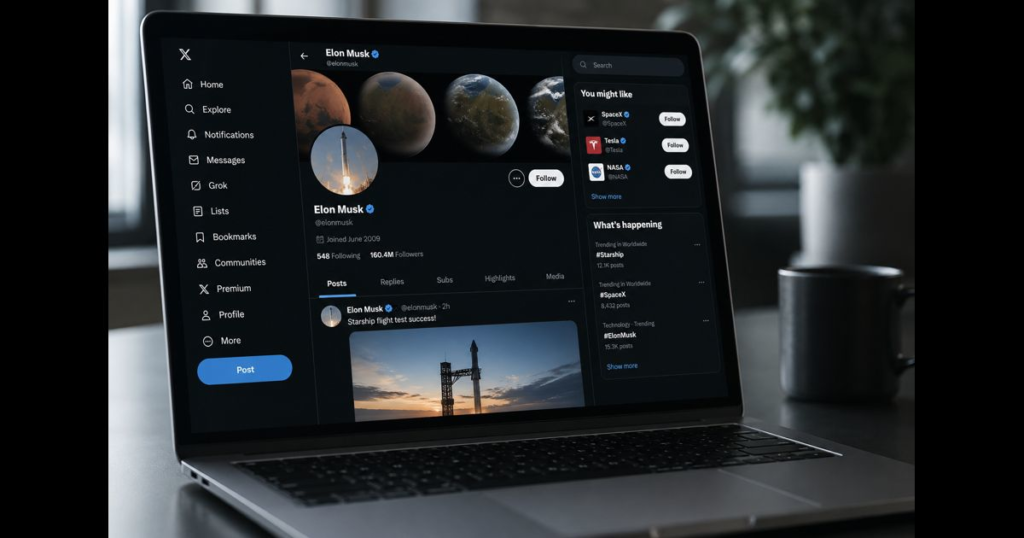
A Twitter viewer without account can help you open publicly available X profiles, posts, replies, images, and videos without signing in. It does not grant access to protected posts, private messages, deleted material, or information that X itself does not make public.
The most important distinction is simple: an X account may be public or protected. X states that public posts are visible to anyone, including visitors without an account, while protected posts are visible only to approved followers. A legitimate viewer must respect that boundary.
A viewer can be useful when someone shares an X link, when you want to check a public profile without creating an account, or when you need a quieter way to review public discussion. It should never be treated as a way around another person’s privacy settings.
What a no-account viewer may show
Availability differs between services and can change as X updates its systems. When a public page loads successfully, a viewer may show:
- A public profile name, handle, biography, profile image, and visible links
- Public posts and reposts
- Public replies, although complete reply threads are not always available
- Public images, GIFs, or video previews
- A post’s visible date, link, and engagement figures
- Public trend or topic pages, where offered
Public does not mean permanent. An author may delete a post, make their account protected, suspend their account, or change profile details. A viewer may also have delayed or incomplete data. For important reporting, open the original post on X where possible and preserve the direct URL, date, and relevant context.
What it cannot legitimately reveal
A trustworthy service cannot unlock:
- Protected posts
- Direct messages
- Deleted posts or deleted accounts
- Content restricted by an author’s settings
- Private follower lists or private account information
- The identity of profile visitors
- Login credentials, cookies, or other account data
Be cautious of a page claiming it can reveal private posts, show who visited a profile, or bypass an account’s protection. Those claims conflict with how X privacy controls work and may be used to lure visitors into unsafe downloads, payment prompts, or credential theft.
How to view a public profile without signing in
Start with a public handle or a direct post URL. A handle normally appears after x.com/ in a profile link. For example, a link ending in /example points to the handle @example.
Use a browser-based viewer that accepts a handle or public X link. Do not install an extension simply to open a public profile. A normal browser page reduces the permission risk and is easier to inspect.
Before entering anything, check the address bar carefully. A viewer for public material should not need your X password. If it presents a login form, close it unless you intentionally want to connect an account through the official X authorization screen.
Open the resulting profile and check three things before relying on it:
- Does the handle match the account you intended to view?
- Does the profile description, linked website, and recent activity fit the claimed identity?
- Does the page link back to the original X post or profile?
This simple check matters especially for public figures, businesses, emergency updates, financial claims, and breaking news. An account name can be imitated, and a post can be quoted without the surrounding conversation.
For a walkthrough focused on public profiles, see how to use Sotwe to view public profiles easily.
Why a public X page may not load
A failed result does not prove that a post is private or removed. There are several ordinary reasons a viewer may not display it:
- X may have changed the way public data is delivered
- The viewer may be temporarily unavailable
- The profile may have become protected
- The post or account may have been deleted, suspended, or region-limited
- Media may be hosted separately and fail to load
- The URL may contain an error or refer to a different handle
Try the original X URL, confirm the handle spelling, and try again later before drawing a conclusion. Do not use sites that ask you to bypass restrictions or download a file to “unlock” a public post.
If a public page behaves unexpectedly, these common Sotwe issues and fixes may help identify a basic loading or URL problem.
Privacy: anonymous does not mean invisible
“No account required” means that you are not signing in with an X profile. It does not automatically mean that no data is collected.
Any website can record technical data such as IP address, browser type, device information, cookies, referral information, and activity on its pages. Read the site’s privacy policy before using it regularly, especially if you are opening sensitive links or conducting professional research.
A more careful approach is to:
- Use an up-to-date browser
- Avoid granting browser notifications unless needed
- Decline unnecessary extension installs
- Do not reuse X credentials on an unrelated site
- Clear site data or use a separate browser profile if you want stronger separation
- Avoid entering personal information when only public viewing is needed
Sotwe’s own privacy and security discussion should be read alongside its current policies rather than treated as a substitute for your own review.
Do not enter your X password into a viewer
A public-content viewer has no reason to request your password. If you choose to connect any third-party service to an X account, use only X’s official authorization flow and review the exact permissions requested.
X specifically advises users to be cautious with third-party access and recommends OAuth rather than sharing a password directly. It also notes that connected apps can be reviewed and revoked from the account’s Apps and sessions settings.
If you already entered your password on a site you do not trust, change the password through X, review connected apps, revoke unfamiliar access, and enable available account-security protections.
Use public posts responsibly
Public visibility is not permission to remove context, harass a person, impersonate them, or republish sensitive material irresponsibly. A post can be genuine yet misleading when separated from its date, replies, original media, or later correction.
For higher-stakes topics, verify:
- The account is authentic
- The post date is relevant
- The full thread does not change the meaning
- A primary source supports any major claim
- An image or video has not been reused from an older event
This is particularly important during emergencies, elections, market-moving events, health scares, and conflicts. A viewer is useful for observation; it is not an independent verification system.
Frequently asked questions
Can I view X without an account?
Public X posts may be visible without an account, either directly through X or through a third-party viewer when it can access and display that public material. Access can vary by location, device, and platform changes.
Can I view a protected X account without following it?
No. Protected posts are available only to approved followers. A service claiming otherwise should not be trusted.
Can a viewer show deleted posts?
Usually no. If a post has been deleted or an account has been removed, a normal public viewer cannot reliably restore it. Screenshots or archived copies may exist elsewhere, but they should be treated carefully and verified.
Can I download public photos or videos?
A service may offer downloads for publicly visible media, but copyright, privacy, platform rules, and the creator’s rights still apply. Viewing public media does not automatically give permission to republish it.
Can someone see that I viewed their X profile?
X does not provide a standard public list of profile visitors. Be skeptical of any site that says it can reveal who viewed an account.
Final thoughts
A Twitter viewer without account is most useful for reading genuinely public X material without creating a profile. Choose services cautiously, do not provide credentials, expect occasional missing or delayed results, and respect protected accounts without exception. The safest outcome is not unlimited access; it is a clear, privacy-aware way to review public information with its source and context intact.